

Why AMS Is a Trusted Contract Manufacturer in the Metroplex
September 1, 2026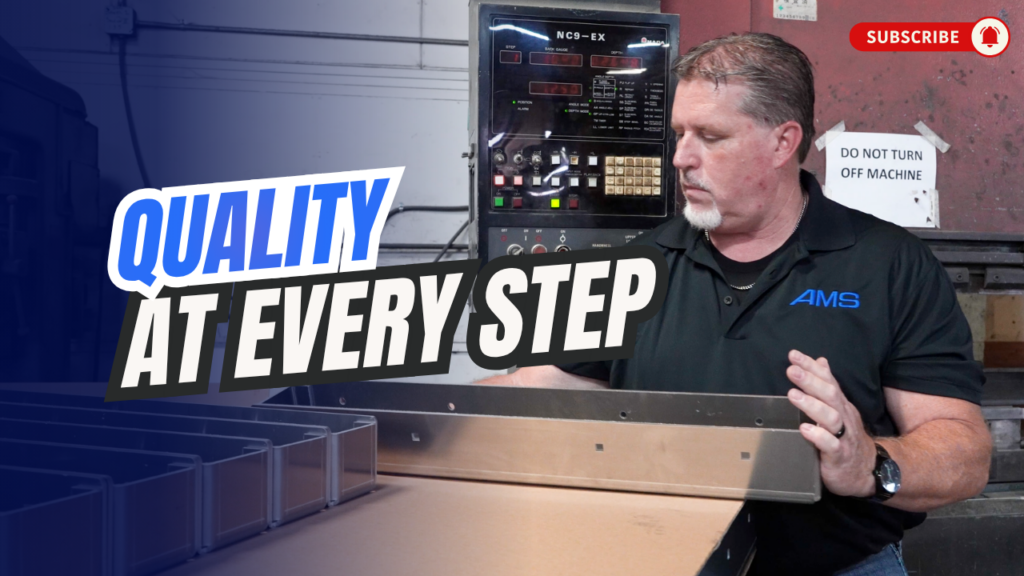
In metal manufacturing, quality is not just a final checkpoint. It is a system that starts before production begins and continues through every step of the process. For OEMs, engineers, buyers, and industrial manufacturers, choosing an ISO-certified metal fabrication partner can make a major difference in part consistency, customer satisfaction, and long-term production success.
At Accurate Metal Stamping (AMS), quality is built into the way work is reviewed, processed, inspected, and delivered. In a recent video, Brett Blocker, Quality Manager and Management Representative at AMS, explained how ISO certification supports the company’s commitment to customer satisfaction, continuous improvement, and defect prevention.
Direct Answer: Why Does AMS ISO Certification Matter? 
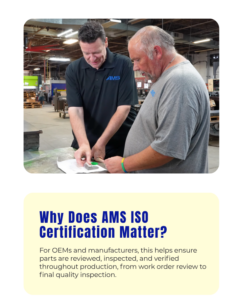
Accurate Metal Stamping is an ISO-certified metal fabrication partner, which means AMS follows documented quality management standards designed to improve consistency, reduce defects, and support customer satisfaction. For OEMs and manufacturers, this helps ensure parts are reviewed, inspected, and verified throughout production, from work order review to final quality inspection.
For companies that need dependable metal fabrication services, AMS provides more than production capacity. The team provides a structured quality process designed to help customers receive the parts they need, made to specification, and ready for use.
What Does ISO Certification Mean in Metal Fabrication? 
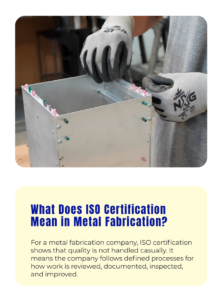
AMS is an ISO-certified manufacturer. ISO stands for the International Organization for Standardization, which develops globally recognized standards for quality, safety, efficiency, and consistency.
For a metal fabrication company, ISO certification shows that quality is not handled casually. It means the company follows defined processes for how work is reviewed, documented, inspected, and improved.
For AMS customers, this matters because metal parts often need to meet exact drawings, dimensions, and performance requirements. A component that is cut incorrectly, formed outside tolerance, or released without proper inspection can create delays, rework, assembly problems, and added costs.
ISO certified quality systems help reduce those risks by creating repeatable procedures and accountability throughout the production process.
AMS Quality Policy: Customer Satisfaction and Continuous Improvement
At AMS, the quality policy focuses on two major goals: customer satisfaction and continuous improvement.
Customer satisfaction means producing parts that meet customer drawings, specifications, delivery needs, and performance expectations. Continuous improvement means the AMS team is always looking for ways to

improve internal processes, reduce defects, and strengthen quality across the shop.
Brett explained that one of the major goals at AMS is to eliminate defects in any process. To support that goal, AMS performs multiple checks throughout production. These checks help the team identify abnormalities before they become larger issues.
This is especially important for OEMs and manufacturers that depend on tight tolerances, repeatable parts, and reliable production schedules. Whether AMS is producing steel components, aluminum parts, powder-coated products, or fabricated assemblies, the quality process helps ensure each job is handled with care.
How Does AMS Inspect Parts During Production?
AMS uses a multi-step inspection process to support quality from the beginning of a job through final shipment. Instead of waiting until the end of production to check a part, AMS builds quality checks into the workflow.
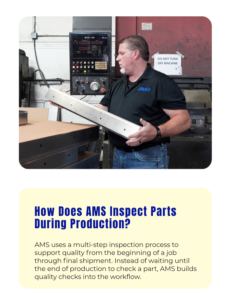
The inspection process includes:
- Work order review
- First part inspection
- Process checks during production
- Final quality inspection
- Release to shipping
This structure helps AMS catch potential issues early, verify that parts match customer drawings, and reduce the risk of defects reaching the customer.
Step 1: Work Order Review

The AMS quality process begins before a part is ever cut, formed, welded, painted, or powder coated.
The quality team first receives and reviews the work order. This step helps confirm that the job information is complete, clear, and ready for production. The team checks for any abnormalities in the work order before approving it.
Once the work order is reviewed and signed off, it is returned to production for processing.
This early review is an important part of the quality control process because it helps prevent confusion before material enters production. In manufacturing, catching a potential issue at the work order stage is far more efficient than discovering it after parts have moved through several operations.
Why Is First Part Inspection Important?
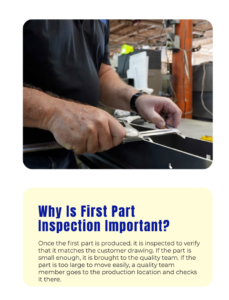
After the work order is approved, the first production operation begins. Depending on the job, the first step may involve laser cutting, sawing, or another process in the shop.
Once the first part is produced, it is inspected to verify that it matches the customer drawing. If the part is small enough, it is brought to the quality team. If the part is too large to move easily, a quality team member goes to the production location and checks it there.
This first part inspection is a critical safeguard. It confirms that the setup is correct before the rest of the job continues.
For customers, this creates confidence that production is starting correctly. For AMS, it helps reduce waste, avoid repeated errors, and keep the job moving in the right direction.
How Does AMS Reduce Defects?
AMS works to reduce defects by inspecting parts throughout the production process, not just at the end. Once the first part is approved, production continues through the required operations.
Depending on the project, a part may move through several areas of the shop, including: 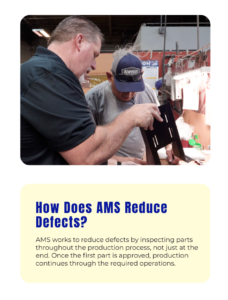
- Laser cutting
- Sawing
- Brake press forming
- Hand sanding
- Welding
- Painting
- Powder coating
- Final inspection
Each process can affect the final part. That is why AMS uses checks along the way to confirm that parts continue to meet the drawing and customer requirements.
This approach helps catch abnormalities as early as possible. If something needs attention, the team can respond before the issue affects the full production run.
For custom metal fabrication projects, this is especially valuable. Many custom parts require multiple steps to complete, and each added step introduces the need for careful process control.
Why Quality Control Matters in Metal Fabrication
Quality control in metal fabrication protects more than the part. It protects the customer’s production schedule, assembly process, and final product performance. 
Poor quality can lead to:
- Rejected parts
- Production delays
- Assembly issues
- Rework costs
- Material waste
- Shipping delays
- Customer dissatisfaction
AMS understands that manufacturers rely on their suppliers to deliver correct parts on time. When a component does not meet specifications, it can disrupt an entire production schedule.
That is why AMS takes quality seriously from the start of the work order through final inspection.
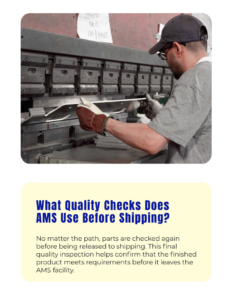
What Quality Checks Does AMS Use Before Shipping?
Some parts may only need to be laser cut before moving directly to final quality. Other parts may go through several operations before final inspection.
No matter the path, parts are checked again before being released to shipping. This final quality inspection helps confirm that the finished product meets requirements before it leaves the AMS facility.
This final review is one more layer of protection for the customer. It helps ensure parts are correct, complete, and ready to ship.
At the end of the day, AMS’s goal is simple: produce a quality product that satisfies customers for years to come.
ISO Certified Quality for OEMs and Manufacturers
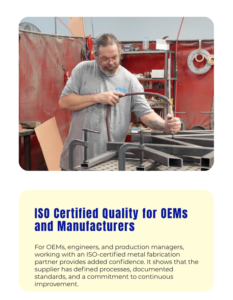
For OEMs, engineers, and production managers, working with an ISO-certified metal fabrication partner provides added confidence. It shows that the supplier has defined processes, documented standards, and a commitment to continuous improvement.
AMS supports customers with:
- ISO certified quality management
- Work order review
- First part inspection
- In-process quality checks
- Final quality inspection
- Defect prevention
- Continuous improvement
- Customer satisfaction focus
This structure allows AMS to serve as a dependable partner for companies that need quality metal fabrication, steel fabrication, aluminum fabrication, powder coating, laser cutting, press brake forming, and production support.
Why Choose an ISO Certified Metal Fabrication Partner?

Choosing an ISO-certified metal fabrication partner helps customers reduce risk. It gives buyers and engineers confidence that the manufacturer has a process for reviewing work, inspecting parts, documenting quality, and improving operations over time.
For companies that need consistent production, this matters. A strong quality system can help reduce defects, improve communication, and support long-term supplier relationships.
AMS combines ISO-certified standards with experienced people, practical shop knowledge, and a customer-focused approach. The result is a manufacturing partner that understands both the technical side of fabrication and the importance of delivering parts that meet expectations.
Frequently Asked Questions About AMS Quality and ISO Certification
What does ISO certification mean for AMS customers?
ISO certification means AMS follows documented quality management processes focused on consistency, customer satisfaction, and continuous improvement. For customers, this helps provide confidence that parts are reviewed, inspected, and produced according to defined standards.
How does AMS check parts during production?
AMS reviews the work order, inspects the first part, performs checks during production, and completes final quality inspection before parts are released to shipping.
Why does quality control matter in metal fabrication?
Quality control helps reduce defects, rework, production delays, and parts that do not meet drawing requirements. It also helps customers keep their own production schedules running smoothly.
Does AMS inspect large parts?
Yes. If a part is too large to bring to the quality area, an AMS quality team member goes to the production location to inspect the part there.
What is first part inspection?
First part inspection is the process of checking the first produced part against the customer drawing before the rest of production continues. This helps confirm that the setup is correct and that the part is being made to specification.
How does AMS support continuous improvement?
AMS supports continuous improvement by reviewing processes, performing quality checks, identifying abnormalities, and working to eliminate defects throughout production.
Choose AMS for ISO Certified Metal Fabrication
When choosing a metal manufacturing partner, quality should be one of the first questions asked. Does the company have documented processes? Do they inspect throughout production? Do they focus on customer satisfaction? Are they committed to continuous improvement?
At Accurate Metal Stamping, the answer is yes.
AMS combines ISO-certified quality standards with experienced teams, reliable processes, and full-service metal fabrication capabilities. From work order review to final inspection, the company is committed to delivering parts that meet customer expectations and support long-term success.
If your company needs an ISO-certified metal fabrication partner that takes quality seriously, AMS is ready to help.
Contact Accurate Metal Stamping today to request a quote and learn how AMS can support your next manufacturing project.


